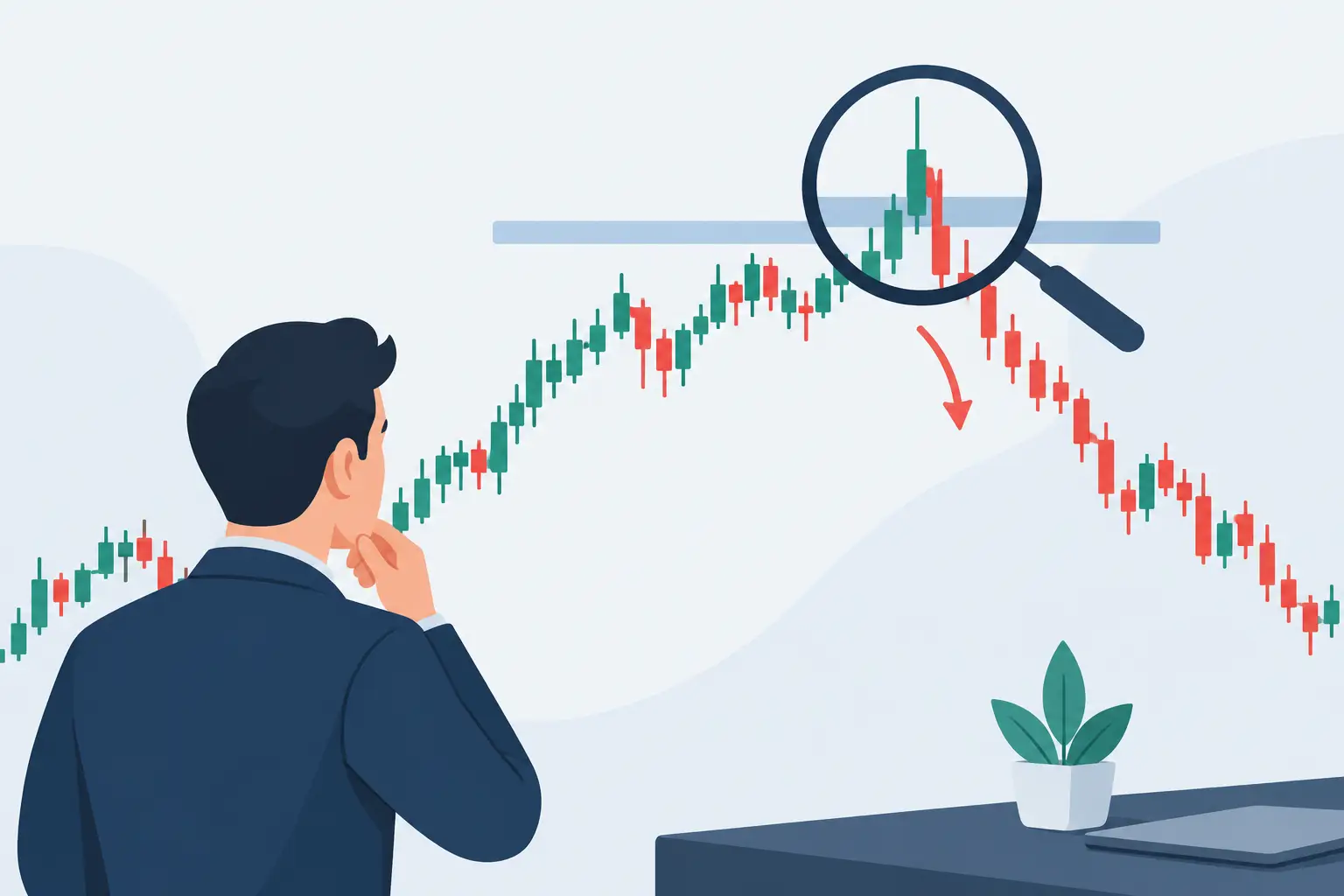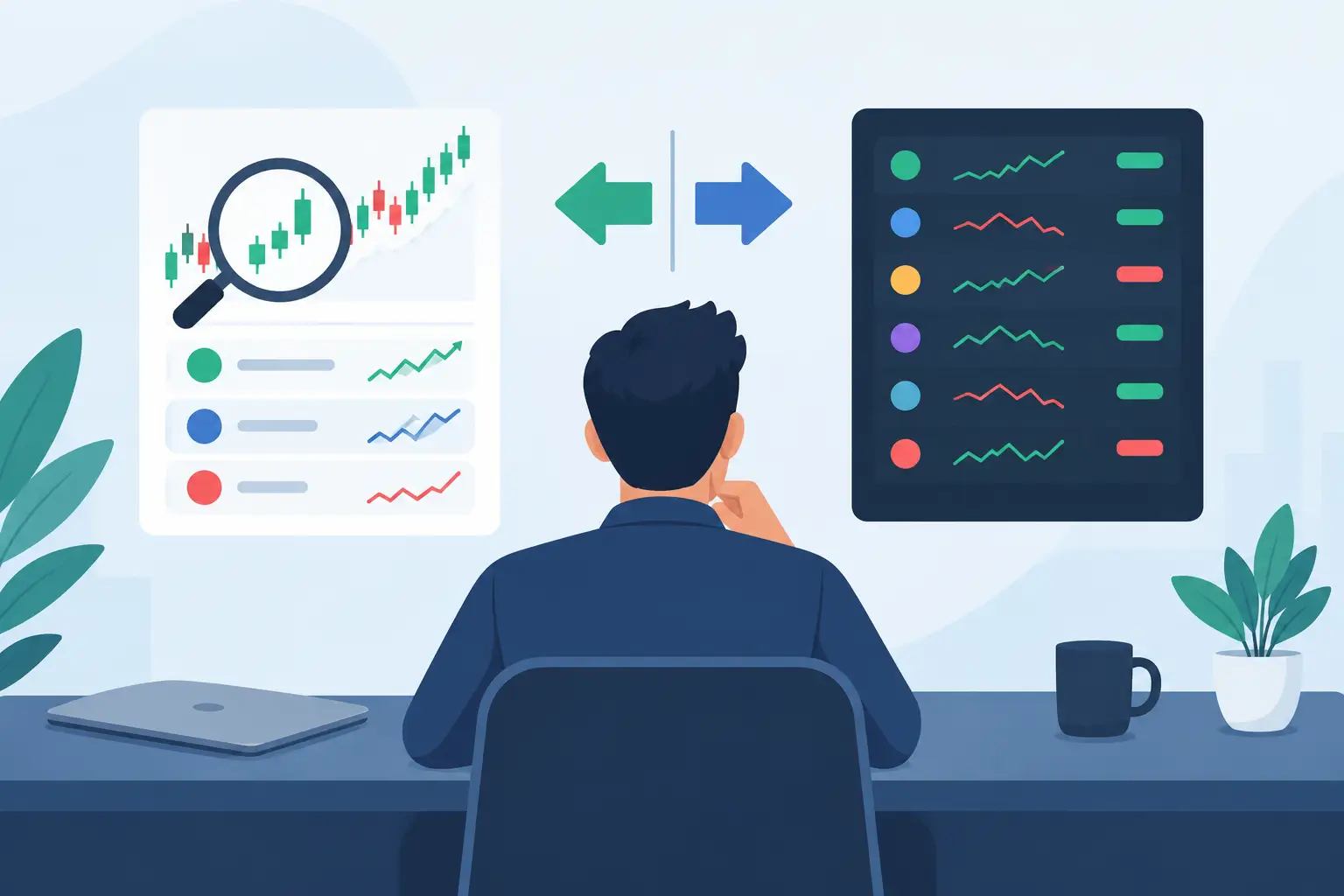
A 20-stock watchlist can feel productive at 8:45 AM. It can also leave you chasing the first candle that moves, entering late, and managing a position you never fully planned. Stock selection versus watchlists is not a question of whether you should scan the market. It is a question of when scanning should end and committed trade planning should begin.
For active traders, a watchlist is a research tool. A selected stock is an execution decision. Confusing the two creates most of the noise, hesitation, and impulsive entries that show up during the opening hours.
What a Watchlist Is Actually For
A watchlist is a temporary field of candidates. Before the market opens, it gives structure to a large universe of stocks by narrowing attention to names with a reason to trade. That reason may be earnings, a regulatory decision, a merger announcement, a material news release, unusual relative volume, a meaningful gap, or a broader sector move.
The purpose is not to predict which ticker will deliver the biggest percentage gain. It is to identify which names deserve further work.
A useful premarket watchlist usually starts with objective filters. Traders may look for stocks with a defined catalyst, sufficient premarket volume, a meaningful percentage move, clean price levels, and enough liquidity for their account size and intended holding period. The exact thresholds will vary. A trader focused on liquid large-cap names will build a different list than a small-cap momentum trader.
What should not vary is the standard: a stock belongs on the list because it meets a condition, not because it is trending on social media or produced one large premarket candle.
A watchlist also preserves optionality. If the market changes before the open, a second or third candidate may become more attractive. That flexibility is valuable during research. It becomes costly when it remains unresolved after the trading session begins.
Stock Selection Versus Watchlists: The Critical Difference
Stock selection is the act of choosing one name that has earned your primary attention. It means the catalyst, volume, price structure, key levels, and risk point have been reviewed. More importantly, it means you know what must happen for the setup to be valid and what would invalidate it.
A watchlist says, “These stocks may matter.” Stock selection says, “This is the setup I am prepared to execute if my conditions appear.”
That distinction changes behavior. With a long watchlist, every alert feels urgent. With one selected setup, the trader can wait for a specific trigger. Instead of reacting to movement, they are evaluating whether the planned trade is actually developing.
Selection is not a claim that the chosen stock will be the day’s biggest winner. It is a judgment that, based on available premarket information, it offers the clearest combination of opportunity and defined risk. The best setup may still stop out or time out. A disciplined process makes room for that outcome before the order is placed.
Why Large Watchlists Create Execution Problems
More ideas do not automatically produce better trades. In fast markets, too many candidates can dilute attention at the exact moment precision matters most.
First, a large list encourages comparison after the fact. A trader may pass on one stock, see it run, then abandon the plan on another name to chase the move. This is not analysis. It is recency bias operating at market speed.
Second, a crowded list makes risk less visible. Traders often know the entry they want but have not fully considered where the trade is wrong, how much they will lose if stopped, or whether the spread and liquidity support the position. When attention is divided across many charts, these details are easy to skip.
Third, watchlist overload creates a false sense of action. Scrolling through ten tickers, listening to alerts, and marking endless levels can feel like preparation. If none of that work produces a clear setup and a defined risk plan, it is activity without a decision framework.
This does not mean traders should ignore other names. It means secondary candidates should remain secondary until the primary setup is invalidated, completed, or clearly no longer relevant.
A Better Premarket Process: Scan Broad, Select Narrow
The strongest process uses both tools in sequence. Scan broadly enough to find legitimate candidates, then select narrowly enough to trade with clarity.
Start with catalysts and participation
Premarket movement needs context. A stock can be up 15% with little volume and wide spreads, or up 5% after a major earnings surprise with sustained participation. Those are different trading environments.
Review the news behind the move. Then assess whether volume supports genuine interest. Premarket volume is not a guarantee of liquidity after the open, but it can show whether the market is actively repricing the stock. Compare volume, price action, and the quality of the catalyst rather than relying on any one metric alone.
Map levels before the opening bell
For each serious candidate, identify the premarket high and low, major whole-dollar areas, prior-day levels, and any clear zones where price previously found support or resistance. If VWAP is part of your plan, define how you will use it. For some traders, a reclaim and hold above VWAP supports a long thesis. For others, failure at VWAP may define a short opportunity. The level is not the setup by itself. Price behavior around it is what matters.
This is where many watchlists should shrink. A ticker can have news and volume but still lack a clean structure. If the invalidation point is too far away, the spread is excessive, or price is extended before your entry condition appears, it may be a name to observe rather than trade.
Define one tradeable scenario
A selected stock needs a specific scenario, not a vague expectation that it will “keep going.” For example, a trader might plan for a break and hold above the premarket high only if volume expands and the entry allows a stop below a nearby consolidation area. Another trader may wait for an opening pullback that holds above a key level before considering an entry.
The scenario should include the trigger, entry area, stop location, target or management plan, and condition that cancels the trade. This is not overengineering. It is the minimum information needed to make an intentional decision once price begins moving.
If you cannot explain the setup in a few direct sentences, you probably have a watchlist candidate, not a selected trade.
When a Watchlist Should Stay Broad
There are sessions when narrowing to one name too early is a mistake. A major market event, broad index volatility, simultaneous earnings reactions, or a weak premarket tape can change the quality of setups quickly. In these conditions, keep a primary candidate and one or two backups rather than forcing complete commitment before the market provides more information.
The key is to distinguish flexibility from indecision. A backup should have its own levels and conditions. It should not become an excuse to jump into whichever chart starts moving first.
There are also days when no stock deserves selection. The catalyst may be weak, volume may be thin, spreads may be too wide, or the available risk-to-reward may not meet your plan. Passing is a valid trading decision. Capital and attention are limited resources.
Measure the Process, Not Just the Winner
A common mistake is judging stock selection only by whether the chosen name made a large move. That is outcome bias. A sound setup can fail, and a poorly planned trade can work.
Review whether the stock met your stated criteria, whether the entry followed the defined trigger, whether size matched the stop distance, and whether you respected the exit plan. Also review the names you did not trade. Did they truly offer a better planned opportunity, or do they only look obvious after the move?
Documenting these details builds evidence over time. It can reveal whether your filters identify the right conditions, whether you consistently enter too early, or whether your stops are placed at levels the market regularly tests. Seven01 applies this same accountability principle by documenting setups through completion, including targets, stops, and trades that time out.
Focus Is Not Fewer Opportunities. It Is Better Decisions.
The goal is not to maintain the smallest possible watchlist or force one trade every morning. The goal is to create a repeatable path from market information to a planned decision.
Use watchlists to organize the opportunity set. Use stock selection to decide where your attention and risk belong. Then let price confirm or reject the plan without turning every moving ticker into a new decision.
A focused trader can still be adaptable. They simply require a reason to change plans. That discipline is often the difference between watching the market and trading it with intent.